15 Weird Airport Codes and How They Came to Be

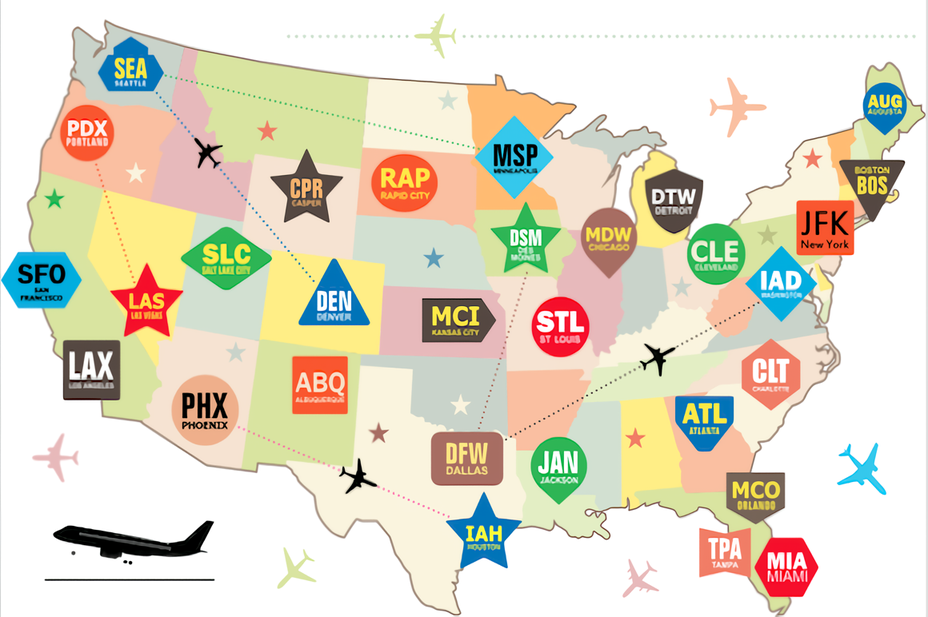
Have you ever been booking a flight and wondered how they come up with the three-letter airport codes? While some are straightforward (like BOS for Boston), others can be a bit of a head-scratcher. These codes are assigned by the International Air Transport Association (IATA) to identify airports, and many have interesting stories behind them. Here are 15 weird airport codes and how they came to be:
Nashville International Airport: BNA
Nashville's airport code comes from its original name, Berry Field, named after Colonel Harry S. Berry, a prominent local administrator.
Cincinnati/Northern Kentucky International Airport: CVG
The Cincinnati/Northern Kentucky International Airport is actually located in Hebron, Kentucky. At the time of its construction, Covington was the nearest large city, so the airport was assigned the code CVG.
Northwest Florida Beaches International Airport: ECP
When the Northwest Florida Beaches International Airport opened in 2010, officials had their eyes on the code TFB for "The Florida Beaches," but it was already taken by Tifalmin Airport in Papua New Guinea. The code ECP was chosen to represent “Emerald Coast of the Panhandle,” although some people joke that it stands for “Everyone Can Party” due to the area’s reputation as a spring break destination.
Fresno Yosemite International Airport: FAT
Fresno Yosemite International Airport gets its code from its former name, Fresno Air Terminal.
Spokane International Airport: GEG
Spokane International Airport's code honors Major Harold Geiger, a pioneer of Army aviation who was killed in a crash in 1927. The airport was originally named Geiger Field in his honor.
Kansas City International Airport: MCI
Kansas City International Airport was once named Mid-Continent International Airport after Mid-Continent Airlines. The MCI airport code remains, despite the airport’s name changes to Kansas City Downtown Airport, Kansas City Wheeler Downtown Airport, and now Kansas City International Airport.
Orlando International Airport: MCO
Orlando International Airport's code comes from its previous life as McCoy Air Force Base, named after Colonel Michael N. W. McCoy.
Harrisburg International Airport: MDT
Harrisburg International Airport's code is MDT, which comes from Middletown, a suburb of Harrisburg where the airport is located. The airport was once the Middletown Air Depot.
Louis Armstrong New Orleans International Airport: MSY
Louis Armstrong New Orleans International Airport was originally named Moisant Field after daredevil aviator John Moisant, who died in a plane crash on the site in 1910. The code MSY was derived from Moisant Stock Yards, as Lakefront Airport already had the code NEW.
Kahului Airport: OGG
Kahului Airport's code on the island of Maui pays homage to Captain Bertram "Jimmy" Hogg, a Hawaiian Airlines pilot who flew the company's first trans-Pacific flight. After being promoted to Chief Pilot in 1946, Hogg was heavily involved in the testing of the newly installed VOR navigation system at Kahului. Due to the significant number of test flights he conducted, the navigation facility on Maui was named in his recognition. Although his last name might have suggested the code "HOG," he opted for "OGG" instead.
Chicago O'Hare International Airport: ORD
Chicago O'Hare International Airport was originally known as Orchard Field Airport. Even though it was renamed in 1949 to honor naval aviator Edward "Butch" O'Hare, the original airport code remained.
Newport News/Williamsburg International Airport: PHF
Newport News/Williamsburg International Airport was originally named Patrick Henry Field, after the founding father and Virginia native. The code PHF was assigned at that time and has remained, even though the airport's name has changed.
Southwest Florida International Airport: RSW
Southwest Florida International Airport's code, RSW, stands for "Regional South-West," which was the airport’s original name.
Sioux Gateway Airport: SUX
Although some have deemed the code for Sioux Gateway Airport in Sioux City, Iowa, unfortunate, the FAA has denied requests to change it. The city now embraces the moniker with “Fly SUX” merchandise.
Destin–Fort Walton Beach Airport: VPS
Destin-Fort Walton Beach Airport's code, VPS, comes from the nearby town of Valparaiso, where the airport's first passenger terminal was located.
Header image by Savgraf via Shutterstock.com
By AirfareWatchdog
By Megan Johnson
By Peter Thornton
By David Landsel
By Carol McPherson
By AirfareWatchdog
By Megan Johnson
By Peter Thornton
By David Landsel
By Carol McPherson